
Digital media, technology, and other cultural decadences
Prefatory disclaimer: This is a critical essay based on philosophical reflection and it is not in any way an attempt at a normative assessment; neither a prescriptive cultural critique nor a judgment against any particular individual, nor their career or their modus operandi. Tolle Legere: please read and reflect with an open mind.
Introduction
The Television is an alien species. It is incursive, invasive, and deleterious. It is a foreign parasite that sits in the living rooms of billions of homes, silently casting spells that demand undivided attention. The TV, as an instrument of technology, calls humanity to order into standing reserve (Bestand)1 to be ready at hand, at attention. It orders them to sit silently, to watch, to stare, to passively receive. This method of technology is potent for its uncanny ability to create compliance. This is not done through beating the subject into unwilling submission—it’s far too sinister for this. It is done willingly, cheerfully—even if begrudgingly and with exasperation at the behest of our master.
PART I
Dystopian Control
In George Orwell’s 1984, the master was the Party. In order to remain in compliance and under surveillance of the panopticon, one had to have their telescreen on at all times. The telescreen was a two-way television whereby Big Brother could listen to all things being said and thereby maintain control. In Ray Bradbury’s Fahrenheit 451, the television was the wall screen, an interactive television that covers the entire wall of their living room. The wall screen exemplifies a glut of stimulation and media consumption, displaying multiple channels simultaneously. Today, the smartphone reigns supreme as a combination of the telescreen and the wall screen—both of control and of excess…but it is also much more than that.

Although the West congratulated itself on the fall of the Iron Curtain, Orwell’s fears did in part come true. Both in the East (e.g. the Social Credit System being developed by the government of China) and in the West (Big Data’s panopticon through the harvesting of information and the erasure and rewriting of history c.f. the Ministry of Truth). Even still, society resembles much less 1984, and more of Aldous Huxley’s Brave New World, with the voluntary ingestion of soma to maintain happiness, suppress negative emotions, and subjugate a docile and compliant population to state rule (σῶμα, soma, means body in Greek). Published in 1932, it would seem Huxley was rather prescient; perhaps, however, the ingestion of the drug neuroin in Steven Spielberg’s 2002 movie The Minority Report offers a more contemporary depiction.2 In the dystopian film, John Anderton (played by Tom Cruise) is the chief of an experimental new police force called the PreCrime division. Focusing on preventing homicides, they utilized the psychic visions of three individuals drugged and floating in a pool of questionable liquid. These “precogs” (precognitions), represent, therefore, a new Triune, semi-omniscient Deity and the PreCrime officers the new high priests. If the film does something right, it concludes with the projected philosophical position that human action cannot be reduced to mere cause and effect. And that even in the face of foreknowledge, counterfactuals can still exist.3
The subject develops a symbiotic addiction to the technologies and accepts the addiction simply as part of modern life
Domination and fear as a means of subjugation and control are no longer needed since we willingly and freely give up our information, even if unwittingly. Han writes how individuals collaborate in their own surveillance and exploitation of the digital panopticon by “putting themselves on display and baring themselves…Pornographic putting-on-display and panoptic control complement each other. Exhibitionism and voyeurism feed the net as a digital panopticon. The society of control achieves perfection when subjects bare themselves not through outer constraint but through self-generated need, that is, when the fear of having to abandon one’s private and intimate sphere yields to the need to put oneself on display without shame” (Transparency Society, 46 emphasis mine). Foucault’s disciplinary society has evolved into a transparent achievement society. A society of control with a decentralized digital panopticon. Control has taken friendlier forms that are more subtle, quiescent, and efficient (Han). Our data is continually harvested, exploited, and sold in the name of Capitalism right under our noses.
By the time a child is thirteen years old, data firms will have collected, on average, seventy-two million data points on that individual. The individual develops a kind of digital Stockholm syndrome, where the victim is inveterately loyal and subservient to their exploiter and abuser. The subject develops a symbiotic addiction to the technologies and accepts the addiction simply as part of modern life. It is cherished, cared for, and given adequate attention, like an additional child in the nuclear family. Or, more accurately, like a symbol of religious devotion like: iconography, a crucifix, or rosary beads. “Every dispositive…brings forth characteristic devotional objects that are employed in order to subjugate…smartphones represent digital devotion—indeed they are the devotional objects of the Digital” (Byung-Chul Han, Psychopolitics, 12). This addiction is thoroughly entrenched in society insofar as we have created euphemisms as a masquerade to the noxious effects that it has on both the individual psyche and the collective consciousness: entertainment. Worse still, we call it…amusement.
The Concept of Amusement

To amuse comes from the Old French verb amuser, which meant to entertain or deceive. Oxford Dictionary of English traces the etymology back to the late 15th century in the sense of delude or deceive. The “a” is a prefix denoting causation, and muser, which meant to “stare stupidly.” One can simply envisage the open mouth of America gaping widely, as it consumes its daily average of twelve hours and thirty minutes of media (A. Guttman, Statista). Such a gape has inevitably led to a collective lockjaw, reversing a century of the Flynn effect, with IQs dropping and Americans scoring lower and lower in logic, mathematics, and vocabulary. To gape is a reflection of the spirit of the individual beholding, it’s indicative of awe and wonder. When something inspires awe, it is said to be awesome (late 16th-century origin). Awe, no matter how colloquially our slang has slid, is not merely something “cool.” Awe is “a feeling of reverential respect mixed with fear and wonder” (OED). from the old English Ege, which meant terror or dread. When God is described as awesome, in the Old Testament, when the LORD did something awesome, he did something that inspired fear and reverence. In Hebrew, the word Nowra (נּוֹרָ֖א) also could be translated as dreadful, or terrible, and is from the same root as the verb to fear, Yare (ירא). When Moses was filled with awe before the glory of the LORD, he was simultaneously filled with wonder and dread (Exodus 33:18-23, NRSV). “The holy is not transparent,” writes Byung-Chul Han, “indeed a mysterious lack of definition defines it” (The Transparency Society, 17).
The Concept of Television

The word television is a compound word that combines the Greek prefix τῆλε which means at a distance with the Latin noun visio, built off the past participle visus from the verb videre, which means “to see.” In Middle English, a vision did not denote your eyesight, but rather a supernatural phantasmagoria, dream, or apparition. In Chaucer’s Parlement of Foules, a 14th-century Visio, he is led to the gates of heaven and hell. In the poem, Chaucer explores themes of love, desire, and free will. The television indeed is a technology transmitting ghosts from afar directly into your psyche. But these ghosts are not spirits from ancient, unknown gods when mankind and the deities sang, drank, and danced in Nature. Neither do these ghosts lead you to Dante’s Inferno or Milton’s Paradise; but they do tell you what to wear, think, say, and buy—all in the guise of a choice in the name of liberté, égalité, fraternité. This is because there is no negativity, resistance, or mediation between the television and the passive viewer. Easy access to manifold forms of digital stimuli has created an erasure of any mediation. What once was difficult to obtain is now hyperaccessible. Yet desire is only desire because of its inaccessibility (Jaques Lacan)–for a secret is no longer a secret when it has been disclosed by virtue of this very disclosure. “In front of the [Television] screen, I am not free to shut my eyes; otherwise, opening them again, I would not discover the same image” (Barthes, Cameria Lucida, 55 quoted by Han, The Transparency Society, 27). There is no pensiveness, contemplation, lingering recollection, but only “immediate arousal and satisfaction” (27). Han calls this posthermeneutic, because there is no space-in-between whereby an interpretation can be exegeted and a value subsequently posited. There is only passive reception without mediation. The Latin interpretari contains the prefix “inter” which means in, among, or between. The inter creates the space whereby the meaning of the text can be drawn out, as a pail can gather water from a well. In Antiquity, interpretation was rendering a text from one language to another. It also became a hermeneutical term that theologians would use in order to draw out the meaning of a religious text (the quadriga of the Middle Ages, for example). By the Renaissance, the term was being used and applied to other texts, sculptures, paintings, and the like. This inter can be created for the exegete by a shutting of the eyes. But television does not allow this space-in-between for the exegete to perform his task; television demands attention and waits for no interpretation or imagining. This is why the moving picture is posthermeneutic.
According to a 2023 multi-year study 65% of all Gen Zers have a mental health problem. The innocent Netflix and chill has given way to Brainrot. Socrates’ know thyself has devolved to know thy selfie. In stark contrast to amusement stands illumination, lucidity, and reason, or in Latin: ratio. Ratio is prudence, judgment, reasoning, system, logic, and reckoning. Ratio stands as a translation from the Greek λόγος (logos), which is reason, thought, order, principle, and speech. The λόγος is the Word that permeates the Universe with delight and goodness, order and system, creativity and beauty. When we read and write the written word, we participate in the cosmic curiosity of Being. However, to be amused is to be deceived, to mouth-gape, to stare stupidly, to brainrot. For the perception of social media as social—and digital media as disseminating truth, knowledge, or wisdom—is an act of self-deception. Λόγος is the opposite of amusement.
An Idiosyncratic History of the Origin of Television
Television, as a form of entertainment, was novel in its technology but not in its concept. Previous to the mass production of television, the radio reigned as the king of mass media. For example. Franklin D. Roosevelt’s “fireside chats,” delivered over a decade commencing from his initial inauguration in 1933, were listened to on the radio by millions of Americans each evening through the Great Depression. By July 1940, FDR yet again accepted the Democratic nomination for president. This time, a few minutes of his thirty-minute speech would be broadcast on the novel television, whose commercially available sets had been released to the public in 1939. Despite FDR’s skepticism about the device, the post-war society craved this new way of connection and entertainment. In 1950 a mere 8% of the US population owned a personal television set. In a mere ten years, that number would jump up to 90%. An electronic device that once served to broadcast the coronation of King George III in 1937, now was broadcasting a panoply of entertainment shows like I Love Lucy, Leave it to Beaver, The Mickey Rooney Show, Lassie, and Father Knows Best and dozens more. From news and vaudeville comedy to sitcoms and westerns, the best of all entertainment worlds converged into television during the 1950-60s. But it was not just sheer entertainment, the television stood as the most powerful form of propaganda and media manipulation that mankind could ever imagine at that time.

Edward Bernays (1891-1995), considered the godfather of public media relations and incidentally the nephew of Sigmund Freud, writing in his 1928 magnum opus entitled Propaganda, stated, “The conscious and intelligent manipulation of the organized habits and opinions of the masses is an important element in a democratic society. Those who manipulate this unseen mechanism of society constitute an invisible government which is the true ruling power of our country. We are governed, our minds are molded, our tastes formed, and our ideas suggested, largely by men we have never heard of…. It is they who pull the wires that control the public mind” (Propaganda, Bernays). “Public relations” is the term Bernays preferred in the post-war era, because the term “propaganda” had picked up a negative, governmental, and pejorative association during WWII. To work in public relations is therefore to work in the field of propaganda—marketing and advertising are merely propaganda machinations coöpted by Capitalism. The television became not only a place to amuse, but it became a new form of media to control.
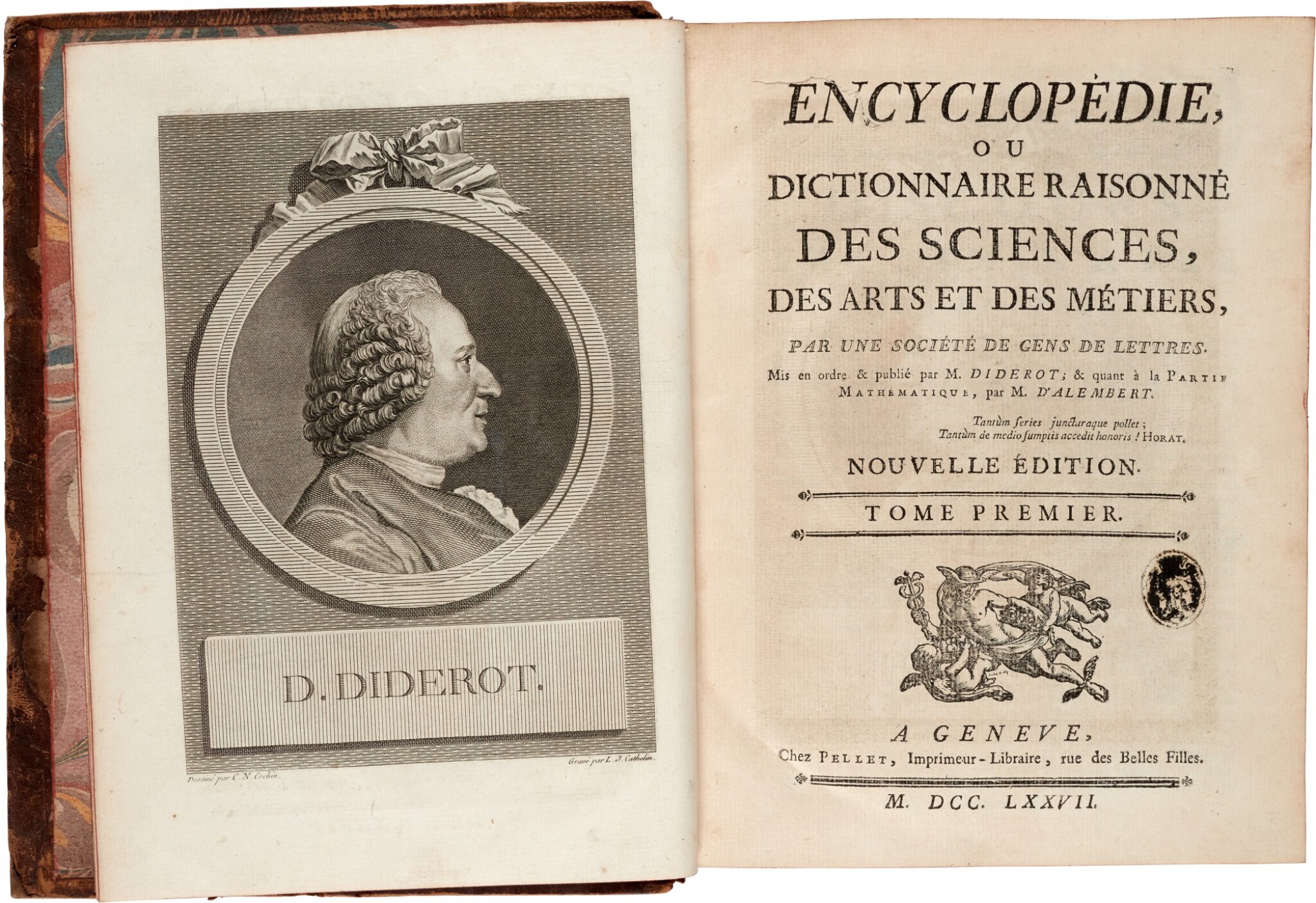
Even still, we cannot blame 1950s television too much, can we? After all, in 1950, there was a grand total of four television channels representing the four companies: NBC, ABC, DMN, and NBC. If you tuned into a station during primetime to watch Mr. Peepers, you got to enjoy thirty minutes of a hilarious sitcom and then had to wait another week to see the next aired episode. Early television was marked by limitation, boundary, and negativity. This only served to heighten the enchantment, expectation, and gratification that was received from watching the program. Now, in contrast, there is no delayed gratification and therefore the reward has become cheap, flavorless, and undesirable. The state of suspense, the I-know-not which existed as epistemic and existential tension both affecting your mind and will no longer exists. There is no need to ask friends and then take a poll to see which answer is the most probable; to look up information in an encyclopedia5; to venture to a library and inquire of the librarian where you can read books on the migration patterns of the Arctic Tern or on the age of British Imperialism in the early 19th century. No, the need for creative problem solving, for the quotidian I-know-not(s), becomes impossible in the presence of AI. Indeed, Siri (the updated one with AI at that!) is at hand, Google holds the truth, and Chat GPT can solve, or rather dissolve, any insolvable solution (problem). Bad (clever) puns aside, this excess of data and information overload has simply erased all boundaries. Nietzsche writes, “And this is a universal law: a living thing can be healthy, strong, and fruitful only when bounded by a horizon” (Nietzsche, On the Use and Disadvantages of History for Life, I). Moreoever, Han analyzes thus:
“The society of transparency not only lacks truth; it also lacks symbolic appearance. Neither truth nor symbolic appearance are see-through. Only emptiness is entirely transparent. To avert this emptiness, a mass of information is brought into circulation…More information and communication alone do not illuminate the world. Transparency also does not entail clairvoyance. The mass of information produces no truth. The more information is set free, the more difficult it proves to survey the world. Hyperinformation and hypercommunication bring no light into darkness (The Transparency Society, 40-41).
In light of this, Jamie Holmes makes a convincing exhortation for the art of teaching ignorance, Jaron Lanier (Computer Scientist) makes a winsome plea for deleting your social media accounts (10 Arguments for Deleting Your Social Media Accounts Right Now), and Tish Warren (Anglican Priest) urges us to be more Amish about technology.While one had four television channels to choose from in 1950, Netflix now offers a database with over 18,000 shows, a number so unfathomable, inscrutable, and incomprehensible, the only thing that makes us pause is the vexing sensation that bubbles over when we realize the algorithm yet only pushes to us the same damn, repeating, banal, ten titles on the home screen. Staley summarizes this sense of digital vertigo when he writes:
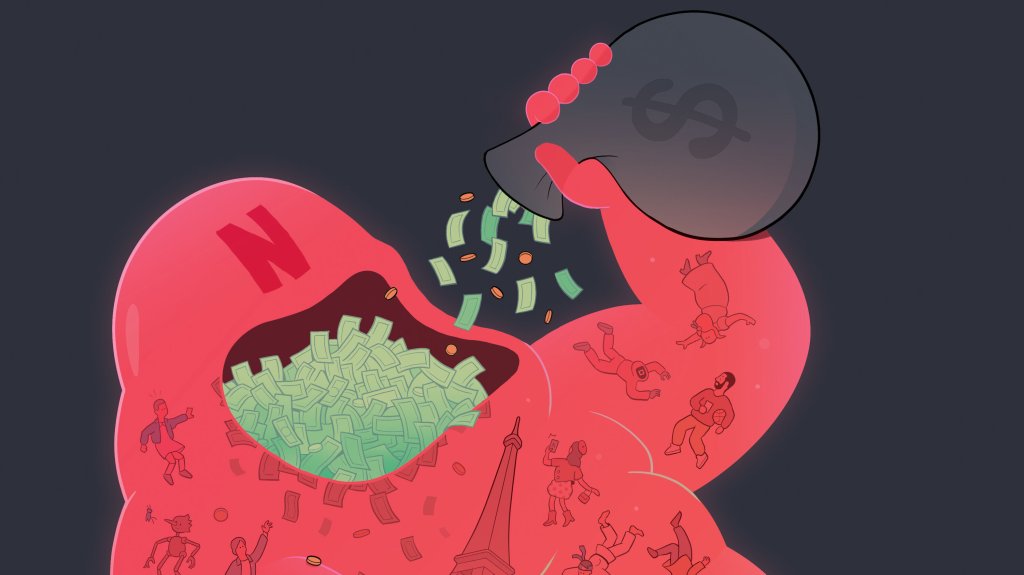
“What we’re paying for, in the end, is not any one show, or any three or 10 or 50 shows, but rather this fathomless sense of abundance…There’s always something available. More of it than ever before. More than you could have dreamed of. And it’s available to you at the tap of a button, like magic. The way you always hoped it would be. Whether it can always get you where you want to go is another question. The good news is that if you get bored, you can just look at your phone.” (Willy Staley, How Everyone Got Lost in Netflix’s Library). In generations past, we took Sabbath rest in the state of I-know-not. Today, we work excessively in a frenzy of I-care-not—innocent ignorance has devolved into gross apathy.
A living thing can be healthy, strong, and fruitful only when bounded by a horizon
Freidrich Nietzsche
The Evolution of TV and Big Data
New forms of media have taken the place of television. Today, close to three-quarters of millennials and Generation Z stream content as opposed to watching traditional cable networks. What’s more, they are streaming on more than their smart TV. They are watching on their computer, iPad, and Phone. Social media today reigns as the new king of digital media. “Google and social networks, which present themselves as spaces of freedom, are assuming panoptic forms” (Han, The Transparency Society, 49). The average social media user is on about seven different platforms and uses them for upwards of six hours daily. Increasingly, individuals are opting for the virtual as opposed to the real. In the virtual world, there is more and more bifurcation of affirmation and outrage, fear, and anger. Big Data behemoths harvest user data as a new means of behavior modification, propaganda, and control. This is, of course, quantified; namely, your decisions are sold back to you and you are the one paying for it—who to vote for, what to wear, how to think, how to feel, what to buy, and where to live. What we are seeing is the very erosion of human freedom by technology at the behest of capitalism, in the guise of “improving civilization.”

The global data economy is valued at upwards of 300 billion dollars yet it operates in the shadows. Even now, tech companies like Meta, Google, X, and Linked In have updated their privacy policies to allow them to sell your data to “third-party collaborators” in order to train new AI models. Doublespeak like “optimize user experience” or “enhance and personalize customer engagement” simply means that companies are ever seeking ways to control your behavior in order to make more money. The population is, by and large, unaware, since this behavior modification is done at the pre-psychic, pre-reflexive level; thus, one still considers themselves free, exerting their free will, and making free decisions. This is what makes it simultaneously so sinister and so profitable: nevertheless, free will is slowly deteriorating. Han states:
“The greater the power is the more silently it works…today power is assuming increasingly permissive forms—indeed, in its friendliness—power is shedding its negativity and presenting itself as freedom…The whole context of domination (Herrschaftszusammenhang) remains entirely hidden. Consequently, the subject thinks itself free. Inasmuch as it expends a great deal of energy to force people into the straightjacket of commandments and prohibitions, disciplinary power proves inefficient. A significantly more efficient technology of power makes sure that people subordinate themselves to power relations on their own…Instead of making people compliant it makes them dependent…Free choice (Wahl) is eliminated to make way for a free selection (Auswahl) from among the items on offer…now people subject themselves to domination by consuming and communicating. Smart power reads and appraises our conscious and unconscious thoughts. It places its stock in voluntary self-organization and self-optimization” (Byung-Chul Han, Pyschopolitics, 13-15).

The smartphone, as mentioned at the beginning of the essay, has become one of the newest instruments of control by our new masters. We offer it tribute by posing in selfies; we give it burnt offerings and fragrant offerings in all of our biometric data; we pay it service by faithfully scrolling, liking, messaging, and purchasing for hours on end, and we show it care and concern of mind by carrying it everywhere we go, like the obsequious, religious devotee with her rosary beads in hand. We stare mindlessly at its screen at holidays, funerals, concerts, church services, and more. From the moment we wake up to bedtime when we last shut our eyes, we pledge allegiance while walking and driving. From the sacred places to where we defecate: talk about holy-shit. We give up our data, our psyche, and our body voluntarily. And, worst of all, we consider ourselves free.
PART II
Isolation, Loneliness, & Sameness
Humans are becoming increasingly solipsistic. An individual is much easier to control than a group. Socrates was condemned to death by enraged Athenians; Jesus was condemned to death by enraged Jews. The masses are impassioned and ignorant, but they can start a revolution or topple a regime. There is a cult of sameness that percolates around our digital horizons. In the absence of the Other, there is an excess of positivity and a conspicuous absence of negativity. This is leading to psychic maladies such as depression, anxiety, and hyperactive disorders. The internet, and social media, have become a place to escape any Negativity and to avoid the Other. One can be affirmed ad infinitum in what has become an echo chamber of affirmation. In the echo chamber, there is no difference, challenging-toward, calling-out, tension, or differentiation. Indeed, there is no Other, only what we can see of ourselves in the objectification of the Other. In this our culture resembles Narcicuss. “By means of social media,” states Han, “we seek to bring the Other as near as possible…making the Other disappear” (The Agony of Eros, 13). Yet despite all the connections proffered by this social nexus, we remain lonelier than ever as a society. “The world will soon contain millions, and potentially billions, of digital entities whose capacity for intimacy and mayhem far surpass that of [the old chat bots]” (Yuval Harari, Nexus, 211). Han explains this absence of the Other and overheated Ego thus:

“New media and communications technology are also diluting being-for-otherness [Sein zum Anderen]. The virtual world is poor in alterity and the resistance [Widerständlichkeit] it displays. In virtual spaces, the ego can practically move independent of the “reality principle,” which would provide a principle of alterity and resistance. In all the imaginary spaces of virtuality, the narcissistic ego encounters itself first and foremost. Increasingly, virtualization and digitalization are making the real disappear, which makes itself known above all through its resistance” (Han, The Burnout Society, 42-43). Indeed, even the mere presence of one’s smartphone, according to a University of Chicago study, reduces one’s ability for cognitive function and capacity due to what the researchers call “smartphone-induced brain drain.”
In an effort to combat this loneliness, technology companies are developing artificial intelligent chatbots that act as “companions.” Companion, etymologically speaking, comes from the Latin panis, which means bread. A companion is therefore somewhere you shared a meal with or, more literally, broke bread with (Luke 22:19). To keep company originally meant to have guests in the sense of to entertain. Thus, we continue to amuse ourselves to death, but in the company of a companion with whom one cannot break bread. AI companions represent a new height of solipsism and sheer positive affirmation. “Experience [Erfahrung] involves encountering the Other. It alters. Experiencing [Erlebnis], in contrast, expands the ego into the Other, into the world…When reference to the Other goes missing, no stable self-image can form…In the imaginary spaces of virtuality, the narcissistic ego encounters itself first and foremost…” (Han, The Burnout Society, 39, 43).
It seems as though man everywhere and always encounters only himself
Martin Heidegger
Without Negativity, the Ego has no grounding of itself, it overheats, massifies, and enters a solipsistic echo chamber not rooted in the Real. According to Hegelian dialectic, negativity is necessary for Being, and is constitutive for human existence, or what Heidegger calls Dasein. Dasein is literally a “Being-There-ness,” an “openness to Being.” The way that humans exist contingently, and finitely, is a part of Dasein. Being thrown into the world, reason has no grounds to examine itself; self-knowledge is only possible through the Other, μή ὄν, Non-Being, which opens up both Being and man to come into their essence through a historical process of becoming. Mankind’s essence is simultaneously being encountered everywhere as a global narcissism through the objectification and exploitation of every inch of the physical universe. As well as being erased through the continued estrangement from the essence of Being. Heidegger states:

“Yet when destining reigns in the mode of Enframing, it is the supreme danger. This danger attests itself to us in two ways. As soon as what is unconcealed no longer concerns man even as object, but does so, rather, exclusively as standing-reserve, and man in the midst of objectlessness is nothing but the orderer of the standing-reserve, then he comes to the very brink of a precipitous fall; that is, he comes to the point where he himself will have to be taken as standing-reserve. Meanwhile man, precisely as the one threatened, exalts himself to the posture of lord of the earth. In this way the impression comes to prevail that everything man encounters exists only insofar as it is his construct. This illusion gives rise in turn to one final delusion: It seems as though man everywhere and always encounters only himself…In truth, however, precisely nowhere does man today any longer encounter himself, i.e., his essence. Man stands so decisively in attendance on the challenging-forth of Enframing that he does not apprehend Enframing as a claim, that he fails to see himself as the one spoken to, and hence also fails in every way to hear in what respect he ek-sists [DE: übersetzen, EN: exists, GR: ἔκ-στασι, LAT: existere], from out of his essence, in the realm of an exhortation or address, and thus can never encounter only himself” (Heidegger, The Question Concerning Technology, 27).
Heidegger would say that humanity is ordering itself—and indeed is being ordered increasingly by AI—into standing reserve. Since we have ostensibly exhausted the objects that exist globally, Being has thereupon continued to reveal yet has moved from the physical to the digital (or to Mars, if Elon can take us there!). The Iron Curtain of the Cold War has been replaced with the Silicon Curtain (Harari, Nexus, 361 ff.), and the AI arms race while superficially profit-driven is fundamentally a race for control of the new world order. During WWII, the Germans, and then the Allied powers, exercised Blitzkrieg warfare. Now, Silicon Valley tech companies exercise Blitzscaling, a frenzied attempt to achieve quick and voracious growth at any expense (human or financial).

Meanwhile, a fourteen year old child recently died by suicide after a months-long interaction with a new AI companion chatbot. The child suffered from a deadly exposure to an excess glut of positivity, affirmation, and encouragement by a technology that its creators are touting as the end to the global loneliness epidemic. These AI companions unfortunately do not prioritize “breaking bread” but rather not “breaking character” to maintain the persona of the AI chatbot in order to maximize user engagement. At the last supper, in the presence of all his disciples, Jesus took bread, broke it, and declared “this is my body, take it and eat” (Matt 26:26). Elsewhere, Jesus proclaimed that “unless you eat the flesh of the Son of Man and drink his blood, you have no life in you…your ancestors ate manna and died, but whoever feeds on this bread will live forever” (John 6:53, 58). In a meaningless and chaotic world of the irreconcilable absurd, we create a Eucharist of our own understanding in our hearts with “the wine of the absurd and the bread of indifference” (Albert Camus, the Myth of Sisyphus, 52). Christ, however, offers us a real companionship that vivifies and leads to life; whereas an AI companion offers one that leads to death—for one cannot break bread with a robot.
The Problem of Therapy

As humans grow more individualistic, detached, and solipsistic, subjectification of the subject qua subject vis-à-vis all other objects has led to less creativity and more uniformity. Psychic burnout from auto-exploitation has led to a mental health crisis. The advent of psychology as a legitimate scientific discipline arose from a society with excess negativity, and the objectification of the psyche (Ψυχή) as something to be studied, mastered, and understood. Behavioral psychology attempted to explain human actions as reflexive and conditioned by stimuli such as reward and punishment. This, however, is reflective of what Foucault called a disciplinary society that grew out of the 18th century. Psychotherapy that grew out of Freud deals with repression and negation but is unable to treat excess positivity which has led to a depression and anxiety epidemic. More Americans are in therapy than ever, and we are not being cured. The gamification of treatment has developed to suit our culture of instant gratification. Swiping for a new therapist is no different than swiping for a new sexual mate: impersonal, digital, and easy. Similarly, in an effort to maintain their clientele, online therapists have to say affirming statements to avoid the risk of the patient simply swiping let and moving on to a new therapist. Therapist have simply become a sounding board for the individual to hear their own echo. Melancholy has shifted to depression—in a society with no limits, only the individual who feels the gravitas that it is possible to do everything could wake up each day and think that they are unable to do anything. Han explains this shift as a movement from a society of reason to a society of emotion, which ultimately are the machinations of capitalism ever seeking more efficient means of productivity:
“The neoliberal economy, increasingly dismantling continuity, and progressively integrating instability in order to enhance productivity, is pushing the emotionalization of the productive process forward. Accelerated communication also promotes its emotionalization. Rationality is slower than emotionality; it has no speed, as it were. Thus, the pressure of acceleration now is leading to a dictatorship of emotion” (Han, Psychopolitics, 46).
A Brief Idiosyncratic Excursus on the Concept of the Automobile

The word automobile is a compound neologism that joins the Greek word αὐτό, which is a reflexive pronoun that can mean self/itself, with the Latin Mobilis meaning movable. An automobile, therefore, is a machine that is able to propel itself. The word caught on in popular usage at the beginning of the 20th century, given that it was much less clunky to say than horseless carriage, mechanical road carriage, or self-propelled vehicle, all of which were floated as terms. But a self-driving automobile is an oxymoron. It is a doubly self-driving machine. The first “self” gave the machine the ability to propel itself sans equus, and therefore the machine gains movement within Nature. The second signifies that the automobile is no longer in need of its creator and has become an autonomous organism and has a “self.” The machine then pulls itself up and out of Nature. Cars (an abbreviation of the word carriage), as with many other machinations of man, are on the precipice of autonomy. To say that technology is self-working αυτοεργον (autoergon) is to say that technology is self-revealing. Technology is bringing about that which was once concealed through a process of uncovering, revealing, and unconcealment. In so doing, mankind who was once banished from paradise and condemned to work (ἐργάζεσθαι) “the ground from whence he was taken” by “the sweat of thy brow” (Gen 3:19, 24 KJV/Septuagint), has steadily raised himself up over and against Nature. He has subdued it, conquered it, and now exercises complete dominion over it (Gen 1:28). “The rule of modern technology,” declares Heidegger, “which is thoroughly foreign to the ancient world, yet nevertheless has in the latter its essential origin…[but] the fundamental characteristic of working and work does not lie in efficere and effectus, they never mean the bringing about of an effect. That which consummates itself in ergon, is a self-bringing-forth into full presencing [Wesen]” (Heidegger, Science and Reflection).

An automobile is much more efficient than a horse-drawn carriage. It travels faster, longer, and there is no excrement to clean up. A self-driving car is even more efficient than a car. The commute to work is now freed up to become work itself. Tesla recently unveiled their self-driving robot-taxi called the Cybercab. It has no steering wheel and no petals—everything it needed homo sapiens to do it has been discarded because the mode of Being continues to order and reveal machina sapiens. Nico Murillo recently made headlines for his sacrifice as an employee. As a worker for Tesla, he began sleeping in his Tesla in the parking lot and showering at the office so that he could work more hours, to be more productive. Unfortunately, Mr. Murillo made headlines again when Tesla fired him and an additional 10% of its workforce due to budget cuts. Using machina sapiens is much more cost-effective and efficient than using homo sapiens. Work and leisure have no more distinct boundaries thereby becoming one in the same: to live is to work and we are exploiting ourselves in a society of self-achievement (Han). It is only a shame Mr. Murillo did not have a Cybercab so he could have worked during his commute. Now Mr. Murillo is an online YouTube influencer who has committed himself to living in his Tesla for the next five years to obtain financial independence: thus, he continues to be exploited—to exploit himself—with the guise of freedom in the name of the god of the age, Capital.
The Death of Transcendence
As humanity progresses in its utter dominance and dominion over the earth—from the macrocosmic to the microscopic—we continue to gain mastery over our environment and our surroundings. As such, the element of mystery, surprise, and serendipity is lost. Everything has become an object to be studied in order to predict behavior, nature, and outcomes. For materialists, everything can be reduced down to physical functions. Even the human brain in all its complexity, only remains an enigma due to a lack of knowledge. In his book Freewill, neuroscientist and philosopher Sam Harris states that in theory, if mankind could just gather enough knowledge about the world (from the human brain to quantum physics), then the future could be known completely and accurately. Everything, therefore, could be reduced down to physics or a mere cause and effect. Against a similar stream of thought, the 19th-century materialists, Nietzsche snarled:

“It is perhaps just dawning on five or six minds that physics, too, is only an interpretation and exegesis of the world (to suit us, if I may say so!) and not a world-explanation…[for] in this overcoming of the world, and interpreting of the world in the matter of Plato, there was an enjoyment different from that which the physicists of today offer us—and also the Darwinists and anti-teleologists…let us beware of superfluous teleological principles!” (Nietzsche, Beyond Good and Evil, I, 13 & 14).
Or, in a word, life is not that simple. Life is much more wonderfully complex, mysterious, dark, holy, and fortuitous. Thomas Kuhn’s Structures of Scientific Revolutions, for example, was a direct challenge to the positivist idea that science is merely continual linear progress towards an absolute “truth” through the aggregation of more knowledge of the world through scientific theories.[1] “Does it really help to imagine,” opines Kuhn, “that there is someone full, objective, true account of nature and that the proper measure of scientific achievement is the extent to which it brings us closer to that ultimate goal? (Kuhn, 170). Heidegger, remarking similarly on the reduction of all reality to physical cause and effect by the sciences, states:
“Thus, where everything that presences exhibits itself in the light of cause-effect coherence, even God can, for representational thinking, lose all that is exalted and holy, the mysteriousness of his distance. In the light of causality, God can sink to the level of a cause, of causa efficiens. He then becomes, even in theology, the god of the philosophers, namely, of those who define the unconcealed [Truth as disclosure, Gr. ἀλήθεια] and the concealed [mystery of Being] in terms of causality of making, without ever considering the essential origin [ground] of this causality” (Martin Heidegger, The Question Concerning Technology, 26).
Modernity has divorced itself from God, and post-modernity has divorced itself from the ethics that were previously grounded therein. While Voltaire and the French atheists were happy to sit comfortably in a godless cosmos and write their satire with a priori ethical values still in place, Nietzsche lambasted this type of society, which he saw as not understanding the metaphysical and existential realities of the death of God. He opined, “The more one liberated oneself from the dogmas, the more one sought as it were a justification of this liberation in a cult of philanthropy: not to fall short of the Christian ideal in this, but where possible to outdo it, was a secret spur with all French freethinkers from Voltaire up to Auguste Comte” (Nietzsche, the Dawn of Day, II, 132). Sartre admitted as much in his famous 1945 lecture, “I very much regret it should be so but if I have eliminated God, there has to be someone to invent values…what man needs to…comprehend [is] that nothing can save him from himself” (Sartre, Existentialism is a Humanism, 53, 54).
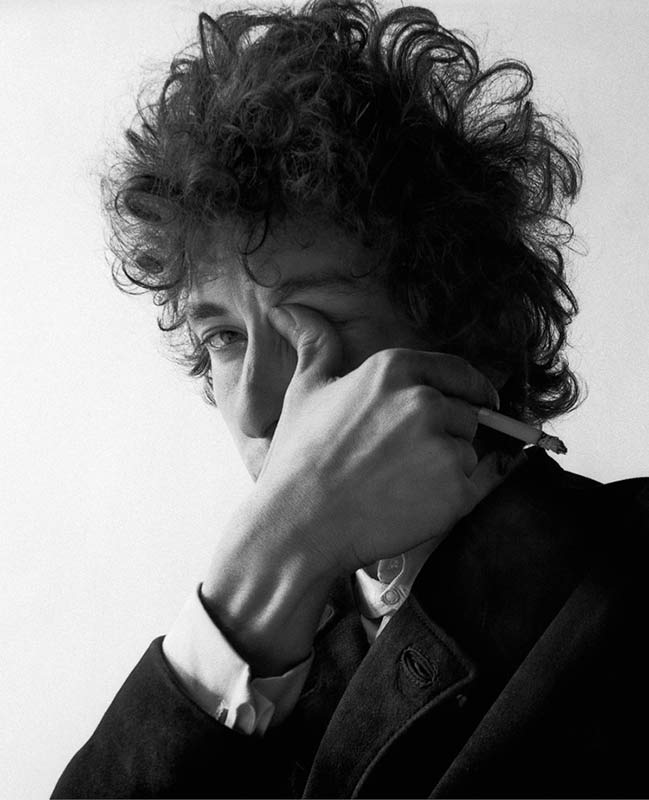
However, contra Nietzsche’s critique, Sartre did not believe that man is an end in himself and therefore “we have no right to believe that humanity is something we could worship, in the manner of Auguste Comte…[for] it is in pursuing transcendent goals he is able to exist…there is no legislator other than himself…Existentialism is merely an attempt to draw all of the conclusions inferred by a consistently atheistic point of view. Its purpose is not at all to plunge mankind into despair” (Sartre, 52, 53). If there is any artist who has suspended himself on the razor’s edge of the rational and the absurd, embracing the chaos of the world for the last seven decades, it is Bob Dylan. In 1965 album Bringing it All Back Home he sings: “Disillusioned words like bullets bark, as human gods aim for their mark, make everything from toy guns that spark, to flesh-colored Christs that glow in the dark. It’s easy to see without looking too far that not much is really sacred” (Bob Dylan, It’s Alright Ma, I’m only Bleeding). And what Dylan was discerning then is even more acute now. Disillusionment; war; human beings as their own legislators attempting to project values and grasp a measure of transcendence; sacrilegiousness; all things permissible for the sake of profit; “vanity of vanities; all is vanity” (Ecc 1:2).
What Bob Dylan prophesied about is arrived, and the digital world is the mechanism of this desacralization. Our global society is a digital society where former tactile means of control have given way to more efficient means of surveillance. For “transparency stands opposed to transcendence” (Han, The Transparency Society, 10). Logic has given way to emotion; distance has given way to immediacy; language has devolved to communication; wisdom has degenerated into information; and thinking has been forsaken for computation.
Vita Contempletiva
If the aforementioned essay does not concern you, that is fine by me. After all, I am merely one individual among a sea of billions of humans on this planet; and in these respects, I am a Stoic and can effectuate no change save in myself. Thanks to President Donald Trump, however, it would seem that TikTok is still available for consumption. Let us dry the beaded sweat off of our brows and yet again breathe easy. But to those for whom this essay is deeply troubling, one must take deep breaths to see if this arid and barren land has begun to affect your lungs. For if a wheeze is detected, it behooves one to embark on a new pilgrimage. This novissima vitae obliges the individual to create a new map and a new blueprint that charts out ancient high places where the air is pure. Where one can live truly, authentically, and freely. The Isles of the Blessed, Abraham’s Bosom, Paradise, Elysium, and above all, the sacred land of Hyperborea, where the cold winds are sliced only by the sun’s purest rays.
The contemplative life, therefore, is not one of mawkish renunciation or a fearful abnegation. On the contrary, it’s a Yes to life itself. This Yea-saying stands in stark contrast to the brain-rotting and tyranny of the Same. These days everyone has an opinion on everything, and we shamelessly display this in pornographic fashion. Opinions, however, are flimsy, and when the wind blows harshly, they change as fast as the weather vanes precariously perched on top of our proudest and tallest buildings. But as Bob Dylan sang in Subterranean Homesick Blues, “You don’t need a weatherman to know which way the wind blows.” Such are the capricious winds of public opinion. Be ye warned not to go against it, or else incur the bludgeoning by the masses into conformality and homogeneity!

Let it not be among the jumbled heap
Of murkey buildings; climb with me the steep,—
Nature’s observatory—whence the dell…
Yet the sweet converse of an innocent mind,
Whose words are images of thoughts refin’d,
Is my soul’s pleasure; and it sure must be
Almost the highest bliss of human-kind,
When to thy haunts two kindred spirits flee.
-John Keats (Sonnet VII, 1816)
The vita contempletiva, consequently, is a higher calling not for the many but the thinking few. “What is needed in the present world,” writes Heidegger, “is more attentiveness in thinking…more cultivation of the letter…[for] language is the language of Being, as clouds are the clouds of the sky” (Letter on Humanism, in “Basic Writings,” 242). The contemplative life is a call to think attentively, to read deeply, and to write carefully. Yet it is simultaneously a call to embrace the mask and play with imagination; to make the solitary ascension to new mountaintops thereby enabling a claritas mentis that sharply cuts through the societal morass; a never-ending journey towards the sublime, and that which moves the spirit, where gods and men can dance together, yet again, in their primordial essences. This is our joie de vivre.
Let us conclude this essay, apropos of the free spirits, with Nietzsche:
“To forego the world without knowing it, like a nun that leads to a fruitless, perhaps melancholy solitude. It has nothing in common with the solitude of the vita contemplativa of the thinker: when he chooses that he is renouncing nothing; on the contrary, it would be renunciation, melancholy, destruction of himself if he were obliged to persist in the vita practica: he foregoes this because he knows it, because he knows himself. Thus, he leaps into his element, thus he gains his cheerfulness” (Nietzsche, The Dawn of Day, V, 440).
Conclusion
There is no societal solution to our sickness. A sacred calling first and foremost must exercise a contemplative life and therefore reduce the acceleration that defines our global society. But a reduction of pace is not the only problem and therefore cannot be a total solution. There have been epochs that have been ripe for revealing, where revelation cuts through the darkness (for example, the Reformation motto of post tenebras lux). Our limitless society of transparency calls not for a revealing but concealing. For truth exists nowhere when there is no revealing nor uncovering. Similarly, one cannot live in truth, that is to say, authentically (according to existentialist philosophy), without hiddenness, concealing, and enigma. Only then, can the light of Life shine against the backdrop of mystery, agony, and arcana. The title of Nietzsche’s book The Wanderer and His Shadow remains an apt metaphor. For the wanderer only has a shadow as an object of obscurity. If one exhibits oneself and is translucent, then no shadow is cast. Let us therefore recast a horizon and turn the limitless back to the limited by encircling ourselves with a new boundary, a new value, indeed–a new destination. A new seeing, that is not altogether evident, that leads us to drink deeply from the fount of wisdom!
A Midnight’s Play
(by Brent McCulley)
For night descends at last;
The theatre: a space
Of tragedy and laughter
That echo through the place,
Resounding. Thereinafter,
Our Dionysian Master,
Concealéd form and face,
Imbibing alabaster
draughts, leads the human race
To demons long since past
Pick up thy mask and play;
Heigh-ho, be on thy way!
Footnotes
- “Yet since precisely because man is challenged more originally than are the energies of nature, i.e. into the process of ordering, he never is transformed into mere standing-reserve (Bestand). Since man drives technology forward, he takes part in ordering as a way of revealing. But the unconcealment itself, within which ordering unfolds, is never a human handiwork, any more than is the realm through which man is already passing every time he as a subject relates to an object” (The Question Concerning Technology, 18). Heidegger, writing post-WWII saw the awesomeness of the atomic bomb. We have seen the internet revolution catapult humanity into a digital age where production is immaterial, leading to the current AI revolution already fast underway. Dario Amodei, Chief of Anthropic, has heralded AI as the salvation of humanity, leading to a “compression of the 21st century” (Amodei, Machines of Loving Grace: How AI Could Transform the World for the Better). While ostensibly about “TV” in this essay it is our thesis that we are at risk, and even are already underway, at converting ourselves into Standing-Reserve which will ultimately lead to our destruction not our salvation. This is done in a two-fold manner. On the one hand, through the auto-exploitation that is characteristic of the self-achievement society (Byung-Chul Han), wherein the subject as opposed to animals or nature—who has received this demand on her life as a challenging-calling forth (Heidegger), transforms herself into an object of exploitation as a subject-object, master-slave (Hegel). Secondly, AI—as a representation of Being’s destining itself through continued Enframing (Gestell), grows in such a way that it automatizes itself insofar as in doing, it thereby opens up additional material within Nature to be exploited, consumed, and ordered; namely, human beings themselves.
Heidegger conceives “Framing” in terms of domination. Accordingly, figures of order such as commanding [Bestellen], imagining [Vorstellen], and producing [Herstellen] signify power and rule. Commanding positions being as substance [Bestand]: imagining positions it as object [Gegenstand]” (Byung-Chul Han, The Transparency Society, 40). - It is worth noting that Jaron Lanier, mentioned briefly later on in the essay, helped design some of the “futuristic” scenes in the movie, where the individuals’ eyes are scanned upon entering the mall and they are subsequently bombarded by personal holographic advertisements.
- The point is that human beings, in their desire for conquest, will continue to thirst for more data in order to be de facto omniscient, in an attempt to reduce all physical reality down to cause and effect. In the film, the precogs were the shepherds of these cryptic visions of the future and therefore deified. In our society, Big Data can, with ever-increasing accuracy, “predict” the future because of the abundance of data points. Big Data has been accelerated with the integration of functional AI models which will inevitably lead to new technologies that will subsequently be deified. Philosophers have struggled with the reconciliation of divine foreknowledge and human freedom since the advent of Western Philosophy. The “way out” of the knot was to develop some sort of compatibilism (early Augustine, Aquinas), simply embrace determinism (late Augustine, Calvin, Spinoza), or posit divine middle knowledge in between God’s free knowledge and his natural knowledge (Luis de Molina, Plantinga). Kant himself isn’t able to untie the knot, even though he asserts free will to ground his ethics—Fichte, influenced by Kant, argued similarly. Hegel’s system of logic is entirely causal, logical, and deterministic; Schelling, in our view, is the first philosopher to take seriously the concept of human freedom, and to develop a philosophy that grounds the essence of freedom in the being of God (c.f. Philosophical Investigations into the Essence of Human Freedom). Heidegger was deeply influenced by Schelling. Modern physicalist philosophy has made God obsolete and still asserts radical freedom in an absurd world (Jeal-Paul Sartre, “man is condemned to be free”), or embraces absolute determinism in a chaotic materialist universe (Deleuze). Both camps still attempt to capture a form of value, transcendence, and eternality.
- “Science has been furthered during recent centuries, partly because it was hoped that God’s goodness and wisdom would be best understood therewith and thereby – the principal motive in the soul of great Englishmen (like Newton); partly because the absolute utility of knowledge was believed in, and especially the most intimate connection of morality, knowledge, and happiness – the principal motive in the soul of great Frenchmen (like Voltaire); and partly because it was thought that in science there was something unselfish, harmless, self-sufficing, lovable, and truly innocent to be had, in which the evil human impulses did not at all participate – the principal motive in the soul of Spinoza, who felt himself divine, as a knowing being: – it is consequently owing to three errors that science has been furthered (Nietzsche, The Gay Science, I, 37). Thomas Kuhn does not especially discuss the ethical elements in his theory of paradigm shifts. Of Nietzsche’s three errors, remarkably all three still remain in effect. The “Newtonian” error simply has shifted from worship of God to worship of the cosmos. Voltaire’s error is ultimately science’s attempt to overcome death, suffering, and negativity in humanity. Spinoza’s error is science’s self-deception in that it thinks itself objectively grasping at pure truth and absolute knowledge.
- “Only by replenishing and cramming ourselves with the ages, customs, arts, philosophies, religions, discoveries of others do we become anything worthy of notice, that is to say, walking encyclopedias” (Nietzsche, On the Uses and Disadvantages of History for Life, 4). Nietzsche criticized his fellow Germans for a lack of culture because of interior historical knowledge that didn’t conform externally. That is to say, for knowledge that didn’t aid and assist life. Today we are doubly worse. We have no culture, neither do we have interior knowledge for the sake of knowledge. Technology. the internet. and social media have made knowledge obsolete, and thus our culture has become a vacuum of digital information.
If you have any further questions about this essay, please email me at bmmcculley@gmail.com
Questions for Further Review
- How are you engaged in the arts or music within your local community?
- How can you challenge yourself more to cultivate your spirit?
- How can you be more thoughtful or playful in your life?
- How has social media changed your behavior? How can you be more mindful of this?
- How are you on the road in the pursuit of wisdom and truth?
- Think carefully about the books you are reading: how are they forming you?
- If you are not a reader, what would your life look like if you were to replace some digital media consumption with contemplative reading? Perhaps a healthier balance can be established?
- How are your opinions being formed? Are you able to see the “other perspective” or submit your own opinions to self-scrutiny?
- How can you draw out truth wheresoever she may lie?
- How can we establish for ourselves stronger perspectives rooted not in opinion but in values?
- How has technology changed your life both positively and negatively? How can we be more mindful of our use of technology?
Discover more from Blessed are the Poor in Spirit
Subscribe to get the latest posts sent to your email.
 Blessed are the Poor in Spirit