
There is a loneliness that seethes through my bones that no topical treatment of complacency, apathy, or fecklessness—however benign—can cure. For it is not in the blood, which can be transfused by dexterous surgeon hands, but lies in the marrow. Such a sentiment invariably engenders a hollow, haunting, piercing of the soul, like an icicle through the heart. A pain so uncomfortable yet familiar that it transports you back to the selfsame spot of your birth: desolation row. A place so derelict and grotesque that nobody makes eye contact and yet everybody has become a busybody, hiding among the stench of the masses: abandoned and forsaken. Alone.

Yet beyond my desire for physical affection is the lust for something greater and more transcendental: a shared love for an ideal, something greater than myself. To walk lockstep with a soul on an intellectual plane with mutual passion and understanding for life in all its valences and variations. To be known and understood, even in the deepest recesses of my mind and soul. A soul that is a free spirit and thinker: where wisdom, knowledge, passion, love, courage, and freedom are united in a toxic and inexorable potion. An antidote to life.
Here and there on earth we may encounter a kind of continuation of love in which this possessive craving of two people for each other gives way to a new desire and lust for possession— a shared higher thirst for an ideal above them. But who knows such love? Who has experienced it? Its right name is friendship. Friedrich Nietzsche, The Gay Science, 1.14
Does such a mode of friendship exist? Who is the man who has found this mode of existence? The black raven comes to devour her prey, trying very hard to make it to the top. Struggle ensues, like the Olympic wrestlers of ancient Greece, fighting and striving for glory, the glory that no man can touch, yet he searches for it endlessly. The world is topsy-turvy, like the rattle of a baby who is violently shaking it in an apoplectic fit of rage. Dizziness takes over. Silent night.
The answer came like lightning, in a moment without warning: “What does your conscience say? — ‘You shall become the person you are” (Friedrich Nietzsche). I have felt ungrounded, swirling around like a helpless babe caught up in a violent vortex, the tornado of chaos of life. Absent any cardinal direction, grounding, or security, the dizziness turns into nausea, which quickly transforms itself into sickening dread. Surely this cannot continue endlessly. There seems to be an infinite number of negations that could be pursued; an endless number of “not-I’s” to lay ahold of, dialectically speaking. The person that I am, not the person that I thought I was, or was trying to be, or even the vision that I myself had, that idyllic vision that I manifested to create comfort and happiness for myself in this life; nay, not even these—the person that I am is Christ in me. Indeed, the more that God is in me, paradoxically the more I become who I am, who I am supposed to be. “Vivo autem iam non ego vivit vero in me Christus” (Gal 2:20a). The latin captures this beautifully, “For I live no longer!” writes St. Paul, “Not I, but truly, indeed, in ME, does Christ live.” The latter is not a mere substitution, but it is a transformation, nay, a death and resurrection! It is me no longer, that old self, that flesh, that ego, that illusion, that false self, that mask is hereby dead! Indeed! I am living as Christ, it is Christ in me that I live, the hope of glory. This is my real self, yea, my veritable, true self.

“In order to become myself, I must cease to be what I always thought I wanted to be. And in order to find myself, I must go out of myself. And in order to live, I have to die” (Merton, New Seeds of Contemplation, 47). And so it is to this death and resurrection that I lift my cup and tip my hat. There is no going back. I shall be who I am to be.
Elsewhere, Merton, writing on the imago Dei, poetically states as follows: “To say that I am made in the image of God is to say that love is the reason for my existence, for God is love. Love is my true identity. Selflessness is my true self. Love is my true character. Love is my name… I, who am without love, cannot become love unless Love identifies me with Himself. But if He sends His own Love, Himself, to act and love in me and in all that I do, then I shall be transformed. I shall discover who I am and shall possess my true identity by losing myself in Him. And this is what is called sanctity” (New Seeds, 60, 63).
So what can be done about the marrow of lonliness? No marrow transplant will suffice; forsooth, nothing short of a complete death and rebirth can make these bones live again. It is warranted, welcome, and impending: “The hand of the Lord came upon me and brought me out in the Spirit of the Lord, and set me down in the midst of the valley; and it was full of bones. Then He caused me to pass by them all around, and behold, there were very many in the open valley; and indeed they were very dry. And He said to me, “Son of man, can these bones live?” So I answered, “O Lord God, You know” (Ez 37:1-3). And also, “Again Jesus said, ‘Peace be with you! As the Father has sent me, I am sending you.’ And with that he breathed on them and said, ‘Receive the Holy Spirit'” (John 20:21-23).
God makes the dead the living; he makes the arid desert lush; he makes hearts of stone hearts of flesh; is anything too hard for the Lord? “Behold, I am the Lord, the God of all flesh; is there anything too difficult for Me? (Jer 32:27). Merton again, on writing on the pure heart, profoundly explicates as follows: “You will never find interior solitude unless you make some conscious effort to deliver yourself from the desires and the cares and the attachments of an existence in time and in the world” (New Seeds, 84). And so it is towards this end that I relinquish all of my desires, my fears, my dreams, hopes, my lusts, my insatiable desire for control, my insecurities, my will, my all. Nothing in this life can give me the security, love, and sense of belonging and understanding that I am so deeply desiring. All of the desires that the world foams at the mouth for: power, greed, wealth, sex, material things, influence, &c., all of these things are rotten and turn to dust when even gently probed. As Merton painted the picture, we attempt to “objectify” the false self, the ego and illusion, but cloaking ourselves with these vanities is setting ourselves up for a life of failure and regret. “They [the desires of the ego and false self] are all destined by their very contigency to be destroyed. And when they are gone there will be nothing left of me but my own nakedness and emptiness and hollowness, to tell me that I am my own mistake” (35). So wise is the man who stops pretending. The mask is coming off; for I am naked and exposed, but I am confident. I am that I am.
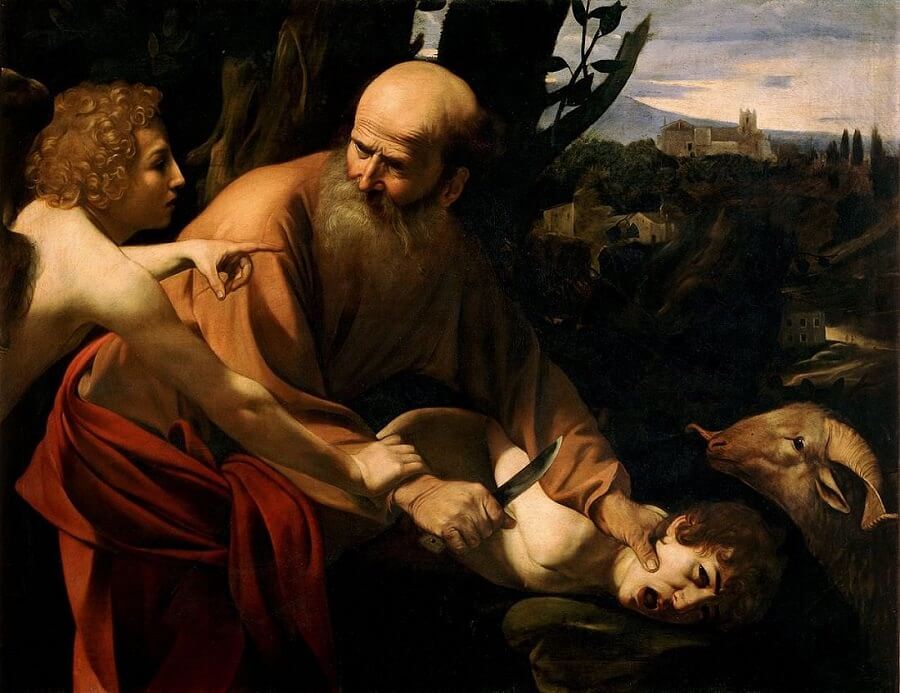
Poetics aside, what does this mean τῇ πράξει, in praxis? Well for one, it means that I have to sit and accept myself as myself. And to learn how to love myself as myself. The Kierkeegardean despair that I feel for not wanting to be myself must give way to what Kierkegaard calls the infinite resignation. This cannot be precluded. For I am Job, I have lost it all; I am Abraham, called by God to sacrifice his beloved firstborn son; I am Jonah, suffering in darkness in the belly of Sheol (שְׁאוֹל). I have nothing and am nothing. This is precisely the resignation that gives way to true faith. Merton to conclude, “This then is what it means to seek God perfectly: to withdraw from illusion… to keep [your] mind free from confusion… to entertain silence in [your] heart… [and] to cultivate an intellectual freedom… to gather all that I am, and have all that I can possibly suffer or do or be, and abandon them all to God in the resignation of perfect love and blind faith and pure trust in God to do His will” (New Seeds, 45-46).
“I’ve given up the game, I’ve got to leave. The pot of gold is only make-believe. The treasure can’t be found by men who search. Whose gods are dead and whose queens are in the church.” -Bob Dylan, Abandoned Love
//to Death & Rebirth
Discover more from Blessed are the Poor in Spirit
Subscribe to get the latest posts sent to your email.
 Blessed are the Poor in Spirit